
Citation : 2026 Bar Bench – CGHC 17
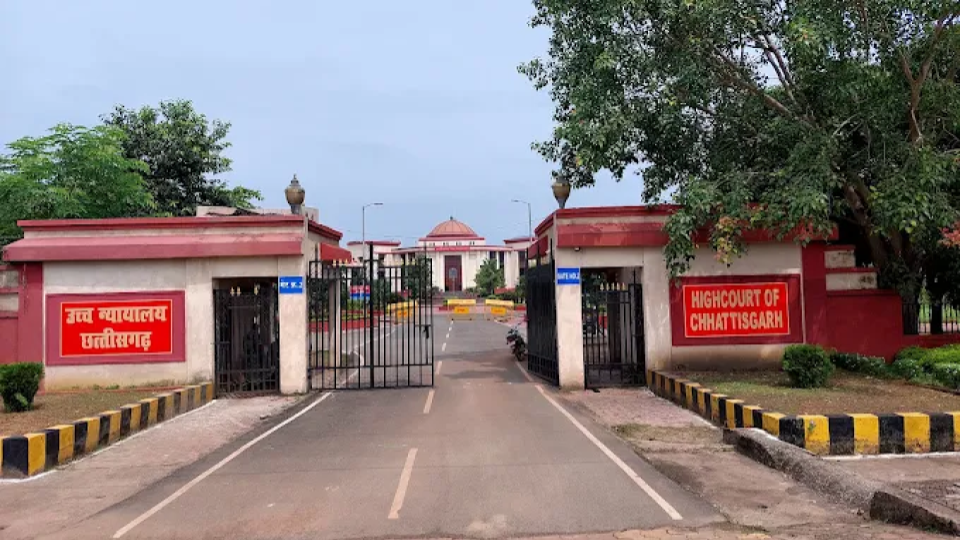
Bilaspur, 06.01.2026 : The High Court of Chhattisgarh has struck down the levy of transit fees on iron ore transported by rail, delivering significant relief to the Steel Authority of India Limited and other mining leaseholders. In a detailed judgment pronounced on January 6, 2026, the Division Bench comprising Chief Justice Ramesh Sinha and Justice Naresh Kumar Chandravanshi held that the State of Chhattisgarh lacks the constitutional and statutory authority to impose transit fees on minerals moved through the railway network.
The ruling came in a writ petition filed by SAIL’s Bhilai Steel Plant, which challenged the validity of Rules 3 and 5 of the Chhattisgarh Transit (Forest Produce) Rules, 2001, along with state notifications issued in 2015 and 2022. These notifications had progressively increased the transit fee on iron ore, culminating in a charge of ₹57 per tonne, even when the mineral was transported entirely by rail.
After examining the scheme of the Indian Forest Act, 1927, the court drew a clear constitutional boundary. Section 41 of the Act empowers states to regulate the transit of forest produce “by land or water.” The Bench held that this language cannot be stretched to include railway transport, which falls squarely within the Union’s legislative domain under the Seventh Schedule of the Constitution. Any broader interpretation, the court observed, would make the provision constitutionally vulnerable.
The judges also noted that although minerals are included in the definition of “forest produce” when found in or removed from forest land, that inclusion cannot override constitutional limits. Once forest land is lawfully diverted for mining and minerals are transported under valid leases, regulation is primarily governed by central legislation such as the Mines and Minerals (Development and Regulation) Act, 1957. The State, the court said, cannot impose a levy that in substance operates as a tax on minerals.
A key factor in the decision was the nature of the levy itself. The court found that a flat, tonnage-based charge bears the characteristics of a tax rather than a regulatory fee. There was no discernible link between the amount collected and any service rendered by the Forest Department in relation to railway transport. This lack of quid pro quo, coupled with the uniform rate applied irrespective of distance or regulatory effort, led the Bench to conclude that the impost violated Article 265 of the Constitution, which bars taxation without authority of law.
The High Court also relied on earlier judicial reasoning, including a judgment of the Allahabad High Court in Hindalco Industries’ case, where similar transit rules were held inapplicable to rail transport. The Chhattisgarh Bench agreed that the computation mechanism under the 2001 Rules is designed around road-based transport and check-post regulation, making it unworkable for railways.
As a result, the court quashed the 2015 and 2022 notifications and the consequential demand letters, insofar as they sought to recover transit fees on iron ore transported by rail. The writ petition was allowed without costs, bringing an end to a long-running dispute that had financial implications running into hundreds of crores.
Case Reference : WPC No. 4676 of 2022, Steel Authority of India Limited Bhilai Steel Plant, Through Its Power of Attorney Holder And General Manager (Incharge Law) Bhlai Steel Plant, Ispat Bhawan, Bhilai, District Durg, Chhattisgarh and Another vs State of Chhattisgarh Through The Secretary , Department of Forest And Climate Change, Mahanadi Bhawan, Atal Nagar, Nawa Raipur, District Raipur Chhattisgarh and Others
Counsels : For Petitioners : Mr. Rajeev Shakdhar, Senior Advocate appearing through Video Conferencing assisted by Mr. Ankit Singhal, Advocate through Video Conferencing, Mr. Pawan Shree Agrawal and Mr. Ashish Mittal, Advocates For Respondents No.1 to 3/ State : Mr. Praveen Das, Deputy Advocate General For Respondent No.4/UOI : Mr. Ramakant Mishra, Deputy Solicitor General assisted by Ms. Annapurna Tiwari, Central Government Counsel.