
Citation : 2025 Local Law – CGHC 933 : 2025:CGHC:59877-DB
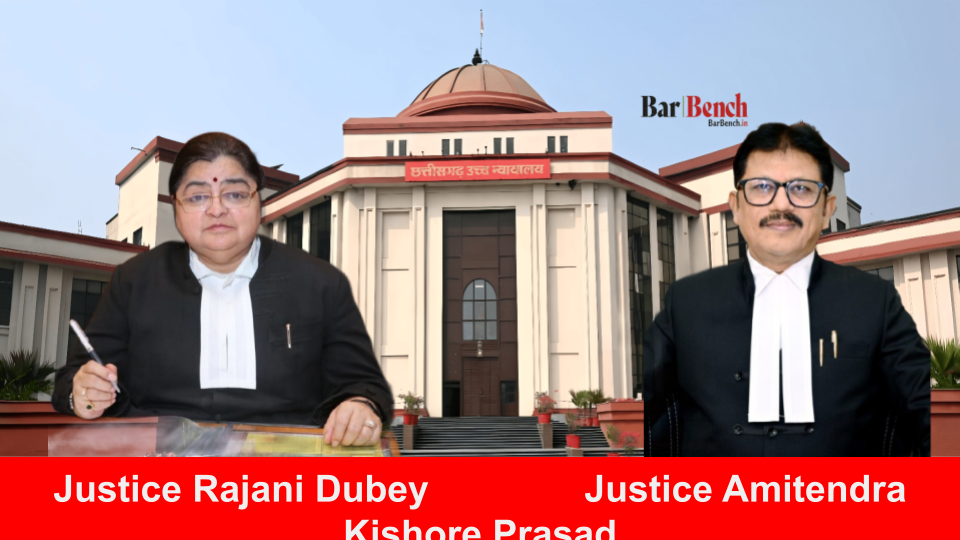
The Chhattisgarh High Court at Bilaspur has set aside convictions in a high-profile criminal matter, acquitting two accused and affirming earlier acquittals for others after finding the prosecution’s case riddled with inconsistencies and exaggerations. The two-judge bench Justice Rajani Dubey and Justice Amitendra Kishore Prasad heard appeals arising from a 2012 trial and explains why the prosecution failed to prove guilt beyond reasonable doubt.
The criminal litigation began with allegations that a young woman from Korba had been lured with a promise of employment, confined and taken to several locations where she alleged she was sexually assaulted by certain accused. At trial, the Sessions Judge convicted two persons Amrit Lal Kerketta and Ashu (Anshu) Rathore while acquitting several co-accused. On appeal, the High Court re-examined the evidence, including the complainant’s own statements, medical reports and contemporaneous police records.
A central theme of the High Court’s analysis was the reliability of the prosecutrix’s testimony. The bench recorded that she had made inconsistent statements, initially giving an affidavit and statements favorable to the accused before later changing her account when relatives arrived at the police station. The trial court itself had found portions of her testimony to be exaggerated and not wholly believable. The High Court placed weight on those findings and noted that medical evidence did not corroborate allegations of forcible intercourse.
The court also considered documentary entries from local police records and evidence pointing to existing enmity between the prosecutrix’s family and one of the accused during earlier local disputes. Those facts, together with the gaps and contradictions in the prosecution’s narrative for example, delays and changes in the complainant’s versions and questions about ownership and seizure of certain material items led the bench to conclude that the prosecution had not met the demanding standard of proof required in criminal cases.
Relying on established Supreme Court principles on the cautious approach courts must adopt when a conviction depends solely or primarily on the testimony of an injured witness, the High Court held that two appellants Amrit Lal Kerketta and Smt. Ashu Rathore were entitled to the benefit of doubt. Their convictions were therefore set aside and they were acquitted of the charges that had been pressed against them. The State’s appeal against the acquittal of other co-accused was dismissed as lacking merit.
Procedurally, the bench directed the usual steps for release on personal bond under applicable law and ordered the trial court record to be returned for compliance. The judgment underscores the principle that criminal convictions cannot rest on uncertain or contradictory testimony and that appellate courts must respect legally plausible findings of trial courts unless there is demonstrable perversity or error. Observers say the ruling will be read as a reminder of how closely courts must scrutinize testimonial and medical evidence in sexual offence cases.
Case Reference : CRA No. 326 of 2012, Amrit Lal Kerketta vs State of Chhattisgarh. CRA No. 345 of 2012, Smt. Ashu Rathore vs State of Chhattisgarh with ACQA No. 71 of 2015, State of Chhattisgarh vs Smt. Aashu Rathore and Others.
Counsels : For Accused/appellants : Mrs. Indira Tripathi, Mr. Shakti Raj Sinha and Mr. Pavas Sharma, Advocate. For Respondent/State : Mr. Ashish Shukla, Additional A.G.